
Rangefinders 101
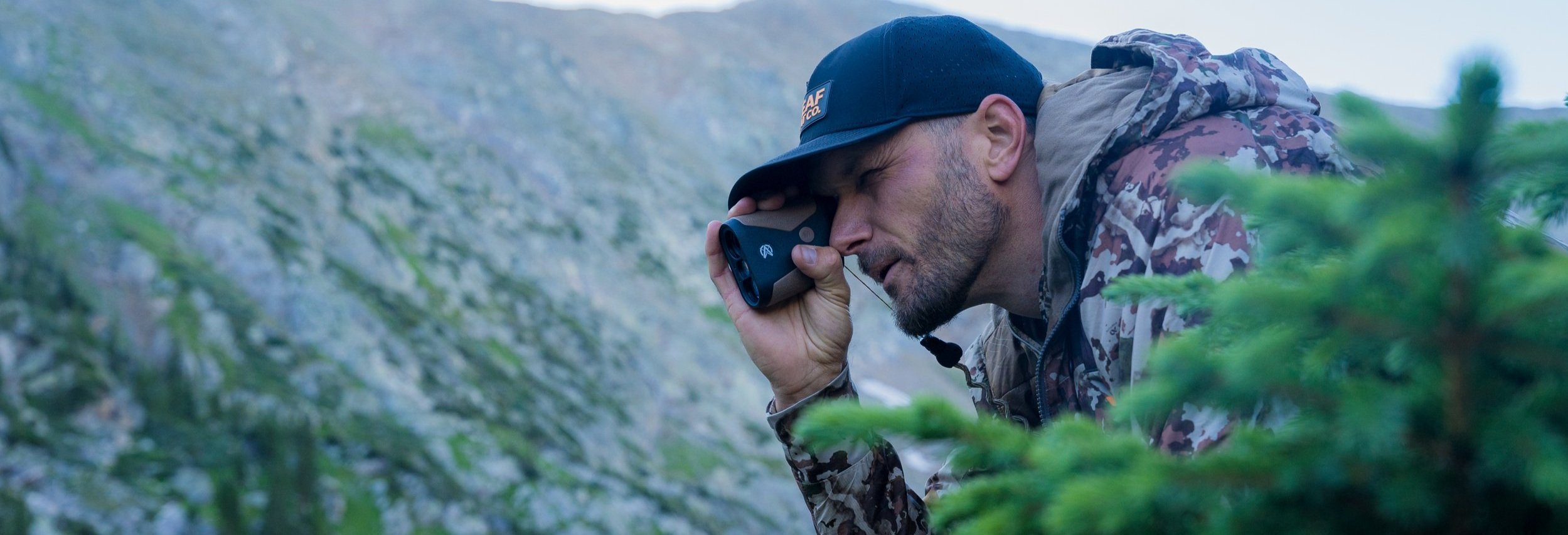
Rangefinders have become an indispensable part of almost every hunter’s kit. From long range, Open country hunting to up-close stalks with a bow, knowing exactly how far away an animal is vastly increases the chances of a clean, quick kill. With the increasing popularity of longer distance shooting with flatter shooting calibres like the 6.5 PRC accurate ranging is an essential part of any successful hunt.
The Basics
A hunting rangefinder is an optical device that measures the distance between you and your target. Its primary goal is to help hunters estimate distances more precisely to make accurate shots, particularly at long ranges where distance estimation can be tricky. By providing accurate distance readings, rangefinders allow hunters to adjust their shots for bullet drop, arrow trajectory, or environmental factors like wind.
Most modern hunting rangefinders use Time OF Flight (TOF) laser technology to calculate the distance between the hunter and the target. Here’s a breakdown of the process:
1. Emitting a Laser Beam: The rangefinder sends a beam of laser light (often invisible) toward the target when you press the trigger or button.
2. Reflection and Return: The laser beam travels at the speed of light, hits the target (such as a deer, tree, or other objects), and then reflects back to the rangefinder.
3. Calculating Distance: The rangefinder measures the time it takes for the laser to return after bouncing off the target. Since the speed of light is a constant, the rangefinder can calculate the distance based on how long the laser takes to complete the round trip.
4. Displaying the Result: The measured distance is then displayed on a digital screen inside the rangefinder, providing the hunter with a quick and accurate readout. Most modern rangefinders are quick, delivering results in less than a second.
The Numbers
Magnification & Objective Size:
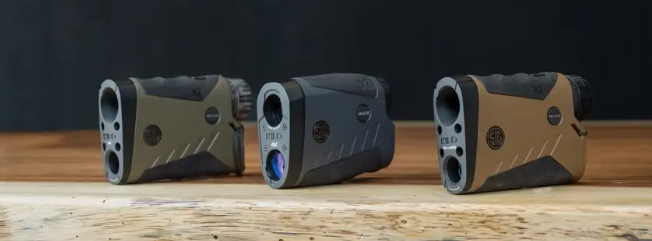
Just like binoculars, rifle scopes and spotting scopes all range finders will have a “magnification x objective” size as part of their specifications. The Sig Sauer KILO 1000 for instance is a 5x20 model. The “5” is the magnification power of the unit (so objects will be 5 times larger than what’s seen with the naked eye) and the “20” is the objective diameter in mm; this determines the Field Of View (or the size of the area you can see) through the viewfinder, The higher the magnification number the larger the objects will appear and the higher the objective number the larger the visible area will be.
Ranging Distance
Most rangefinders on the market today will have a number in their model name (Sig Sauer Kilo 1000; Bushnell Prime 1800 etc.) This usually refers to the maximum distance the unit will range a target out to. As most manufacturers sales & marketing functions are based in the USA this number is generally in yards. This max range is, however, is on a reflective target (think something metal like a road sign etc.) under ideal conditions. As none of the animals we chase in New Zealand are made of metal; and conditions are often far from ideal; this can be quite misleading. Effective working range on hard organic targets, like a tree, will be 60-80% of this distance and even less; 40-60%; on soft organic targets like deer. Using the Sig Sauer KILO 3K as an example what this practically means is:
• Max Range Reflective Target - 3,000 yards (1,097 metres)
• Max Range Hard Organic (trees) - 1,800 yards (732 yards)
• Max Range Soft Organic (deer) - 1,500 yards (457 metres)
The exact numbers for max range, hard organic (trees) and soft organic (animals) each model are usually displayed in the specs section for the relevant model on the manufacturers, or sellers, website or can be found in the units instruction manual.
Advanced Rangefinder Features
Hunting rangefinders have advanced over the years, and many now offer additional features beyond basic distance measurement. Here are some important features to consider:
Angle Compensation: Hunting often involves shooting at targets from elevated positions, such as from a tree stand, or up or down hills. Regular distance measurements can be inaccurate when factoring in steep angles. Angle compensation technology adjusts the distance measurement based on the shooting angle to ensure accuracy.
Target Modes: Many rangefinders come with different targeting modes, including:
First Target Mode: This mode focuses on the first object in the line of sight, useful in open terrain.
Last Target Mode: Ideal for hunting in dense brush or woods, this mode calculates the distance to the farthest target in the rangefinder's path.
Scanning Mode: Provides a continual range update as viewfinder is moved around an area.
Ballistic Data Integration: High-end rangefinders may integrate ballistic data to give even more precise shooting adjustments based on your rifle and bullet type, as well as environmental conditions.
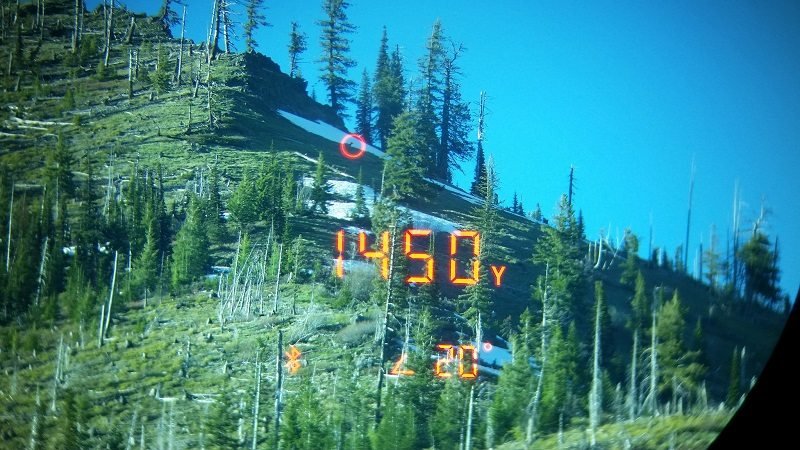
RANGEFINDING BINOCULARS
Many binocular manufacturers are now combining rangefinding capability into field binoculars. This not only removers the need for a separate rangefinder; reducing equipment to carry, and weight but provides the convivence of being able to range while you glass, removing the need to swap units once a target has been located. Most combo units offer a 10x42 binocular (like the Bushnell Fusion X Rangefinding Binoculars), a 1-2,000 yard rangefinding capability and features like angle compensation and multiple target modes
Choosing A Hunting Rangefinder
When selecting a rangefinder, hunters should consider their typical hunting environment and the species they pursue. If you're bow hunting, a rangefinder with shorter range and high precision might be enough. On the other hand, rifle hunters or those targeting larger game at greater distances should opt for models with longer range capabilities and ballistic compensation features. As a general rule the greater the ranging capability of the unit the higher the price so it does pay to remember that 95% of all deer shot around the world are 200m or closer when you are working to a budget.
Hunting rangefinders are valuable tools that can enhance your hunting experience by providing accurate distance measurements, improving your shooting accuracy, and ultimately leading to more successful hunts. By understanding how these devices work and what features to consider, hunters can select the right rangefinder to meet their specific needs and terrain challenges. Whether you're in the woods or out on open plains, a reliable rangefinder will help you take better, more ethical shots.